Founding Voices of Ngā Motu Marine Society
In the late 1990s, long before marine protection was widely understood or broadly supported, a small group of Taranaki locals began asking a simple but powerful question: how do we protect what’s beneath the surface of our coast?
From that question grew the Ngā Motu Marine Reserve Society (now Ngā Motu Marine Society), a community-led organisation that has spent more than 25 years advocating for marine protection, education, and stewardship along the Taranaki coastline.
This article brings together reflections from founding members and early supporters, capturing the origins of the Society, the challenges faced along the way, and the enduring belief that ordinary people, working together, can create lasting change for the ocean.
The Foundations of Marine Protection in Taranaki
The roots of the Ngā Motu Marine Society stretch back to 1980, when concern about the state of the Taranaki coastline was quietly but steadily growing. Commercial squid fishing vessels were visible on the horizon, fish stocks were declining, and there was little understanding, or regulation of marine ecosystems or life cycles.
At the centre of those early conversations was Peter Winter, a journalist and also involved with Forest & Bird Taranaki and Andrew Woodger. Peter spent hours talking with like-minded locals, sharing concerns about overfishing, sediment runoff, and the lack of marine protection. While Andrew, a keen diver, assisted with some of the original surveys of the area.
In 1986 New Plymouth Underwater Club surveyed the marine biology of the Sugar Loaf Islands Marine Park (the islands off Paritutu). This was first time data had been recorded and helped us understand the diversity of marine life.
In 1986 the Sugar Loaf Islands Marine Park was created. Then in 1991 the Sugar Loaf Islands Marine Protected Area (SLIMPA) Act was passed. This meant the area was now protected the area from oil and gas exploration, with specific fisheries regulations. This was also the same year that North Taranaki Forest and Bird were advocating for a South West extension but this was denyed.
In 1994 and in 1997, the Department of Conservation ran photographic surveys of SLIMPA which enabled interested parties to see what was living there.
Dr Bill Ballantine, the founding figure behind the Leigh Marine Reserve and a leading marine scientist from the University of Auckland, visited Taranaki in 1998. Bill spoke publicly about what a marine reserve could achieve scientifically, ecologically, and socially. His visit proved pivotal.
Forest & Bird supported the idea, but it quickly became clear that any new marine reserve would need to be community-led. The Department of Conservation (DOC), having recently navigated political and iwi challenges around the establishment of the Paraninihi Marine Reserve, advised that a locally driven incorporated society would be the most effective and appropriate pathway forward.
An informal committee formed in late 1997, was supported by Ngāti Te Whiti and Ngā Mahanga a Tāiri, and was followed up by the formal election of a committee on 20 February 1998.
The Nga Motu Marine Reserve Society was officially incorporated in October 1998. The main objective of the Society was to establish a marine reserve near SLIMPA in orders to protect marine life, encourage scientific study and foster community awareness.
At the time, there was optimism that a marine reserve might be established by the millennium. This was a hopeful target that underestimated the complexity of consultation, legislation, and community engagement still to come.
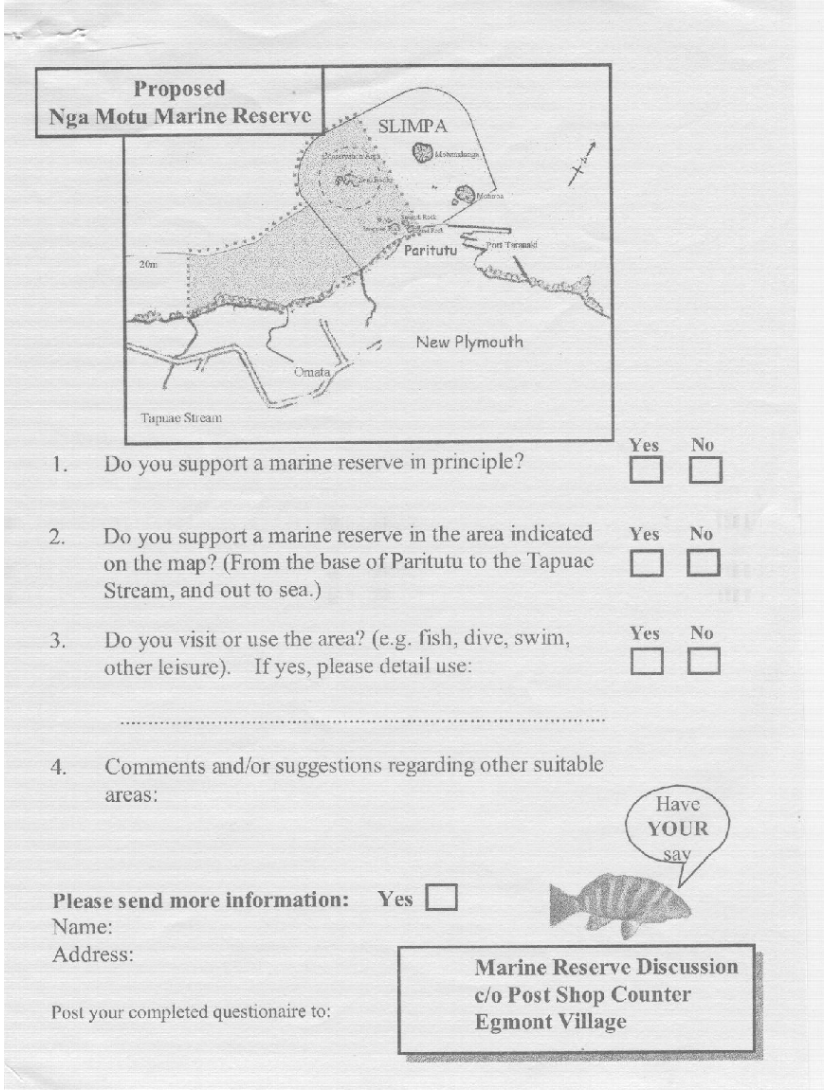
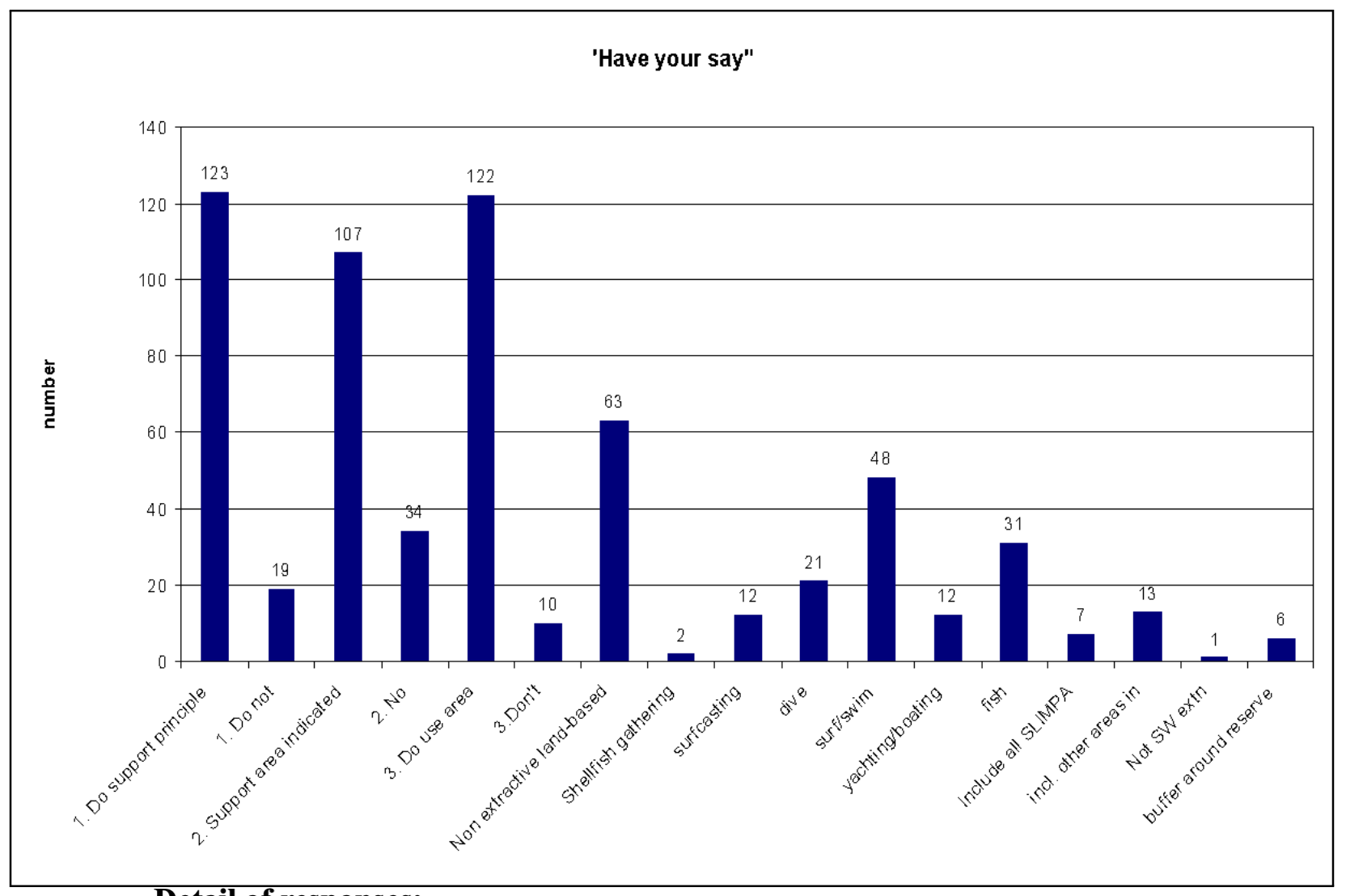
In 1999 a public discussion pamphlet called “Have Your Say”, gathered responses from 142 people. This was to find out who used the proposed marine reserve area, and if they supported the principle of a marine reserve. The results showed 86% of those surveyed did in fact support the principle of a marine reserve.
From 2000 to 2001 data was collected relating to the types of recreational use of the proposed marine reserve area. Then in 2001 the Society invited Bruce Hayward (Auckland University) and Margaret Morley (Auckland Museum) to study the intertidal area between Paritutu and Tapuae Stream. They reported that this area had the richest and most diverse intertidal life along the Taranaki coast. Also in 2001, DOC and University of Waikato conducted a sidscan sonar survey to show the underwater substrate (e.g. profiles of rocks, reefs, sand and depth). All this information showed how special this area is.
Consultation, Challenges, and Community Leadership
From the outset, the Society committed to wide and genuine consultation. This included meetings with local groups, recreational and commercial fishing interests, scientists, and iwi.
Early discussions with Ngāti Te Whiti, a hapū of Te Atiawa associated with the Ngā Motu area, were positive. However, the introduction of the Foreshore and Seabed Act required iwi to shift focus to broader and more pressing issues of customary rights and sovereignty.
Determined to proceed respectfully, the Society consulted with Ngā Mahanga a Tāiri (south of Herekawe Awa. In one memorable moment that captures the grassroots nature of the movement, Anne Scott, who was unable to attend a key meeting due to caring for her elderly mother, sent her daughter Emma Scott, alongside dance teacher Jane Roseman, to present the proposal to Ngāti Tairi kuia. Neither were formal committee members, yet their sincerity and respect helped carry the kaupapa forward.
Throughout this period, DOC offered advice “under the radar,” alongside guidance from conservation boards and scientists, while the Society undertook the public-facing work: endless meetings, newsletters, displays in the New Plymouth District Council foyer, media interviews, videos, and public talks — many featuring Bill Ballantine, whose credibility and passion helped build trust.
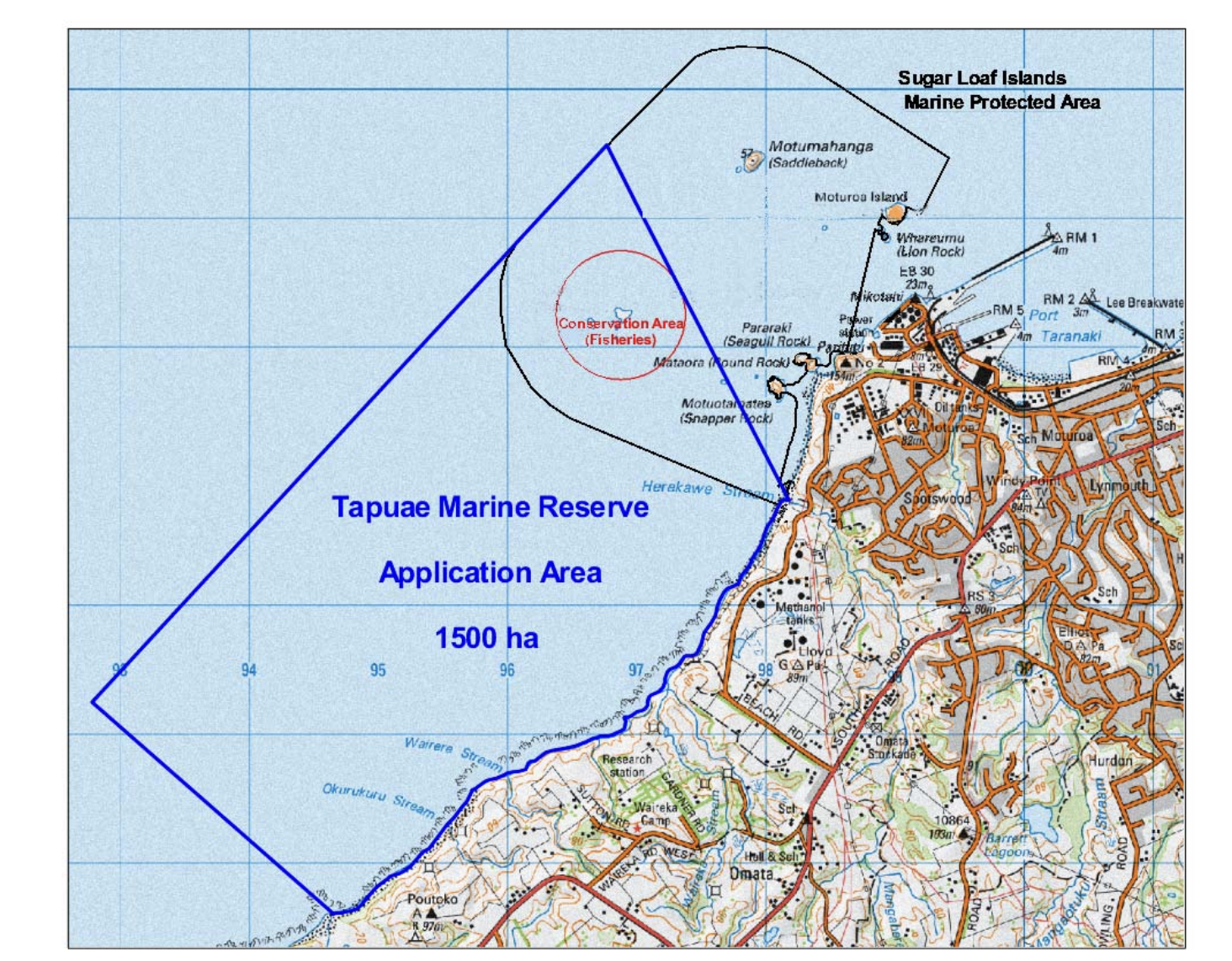
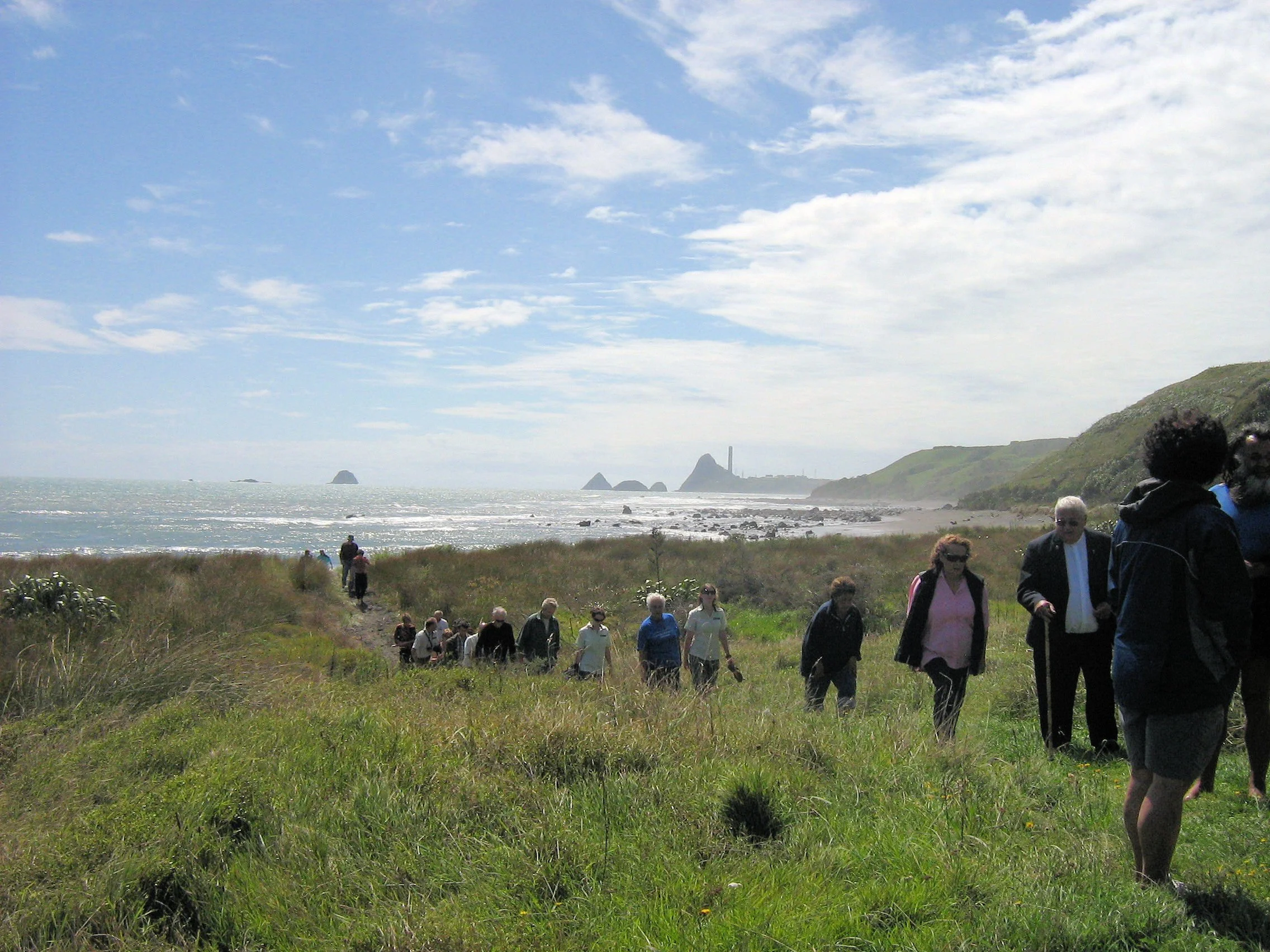
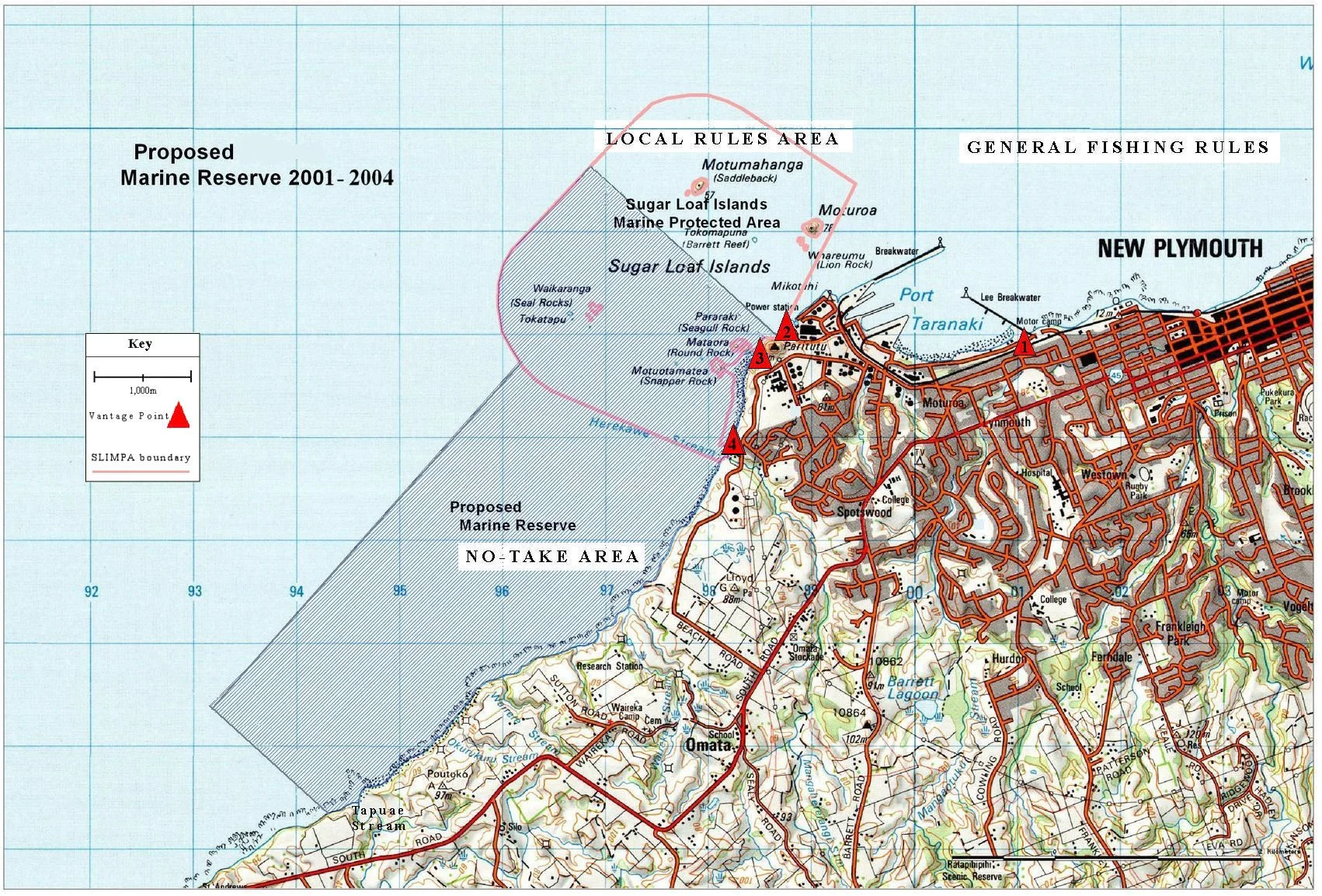
Finally on 12th April 2007, it was announced by the Minister of Conservation and the Minister of Fisheries that the application for the Tapuae Marine Reserve was successful. It was gazetted (became a legal document) on April 10th 2008. Images below show the original map (left) and the opening ceremony for the reserve with Ngā Mahanga a Tāiri.
Who Were the Founding Members?
The Society’s founding group was diverse but united by care for the ocean. Some of the early members included:
Anne Scott – a mother of four with a lifelong connection to the coast and a strong belief in education and teamwork
Peter Winter – journalist and Forest & Bird Chair, whose persistence and vision helped catalyse the movement
Linda McCulloch - health professional, Ngāti Te Whiti
Elise Smith – ecologist and educator at WITT, and a strong advocate for science-based conservation
Val Deakin – Oakura local, dance teacher, and passionate marine conservationist who famously had little blue penguins nesting under her house
Andrew Woodger – a diver deeply familiar with the underwater environment of the coast
**There are several more to be acknowledged but not yet listed.
They met through community meetings, Bill Ballantine’s visit, and a shared urgency to act. While most committees meet formally once a month, in reality this committee worked far more often, responding to consultations, public submissions, political shifts, and growing community interest.
Original Purpose and Vision
At its heart, the Society’s original goal was clear: to establish a marine reserve. But that goal was always accompanied by a broader vision:
To protect marine life, improve understanding of what happens beneath the waves, and connect people directly with the ocean.
Concerns at the time included:
Overfishing and declining fish stocks
Unregulated commercial activity
Lack of public awareness about marine ecosystems
Increasing sediment and pollution along the coast
Science, education, and community involvement were never separate strands — they were intentionally woven together. Surveys, public displays, school involvement, and storytelling all played a role in building support.
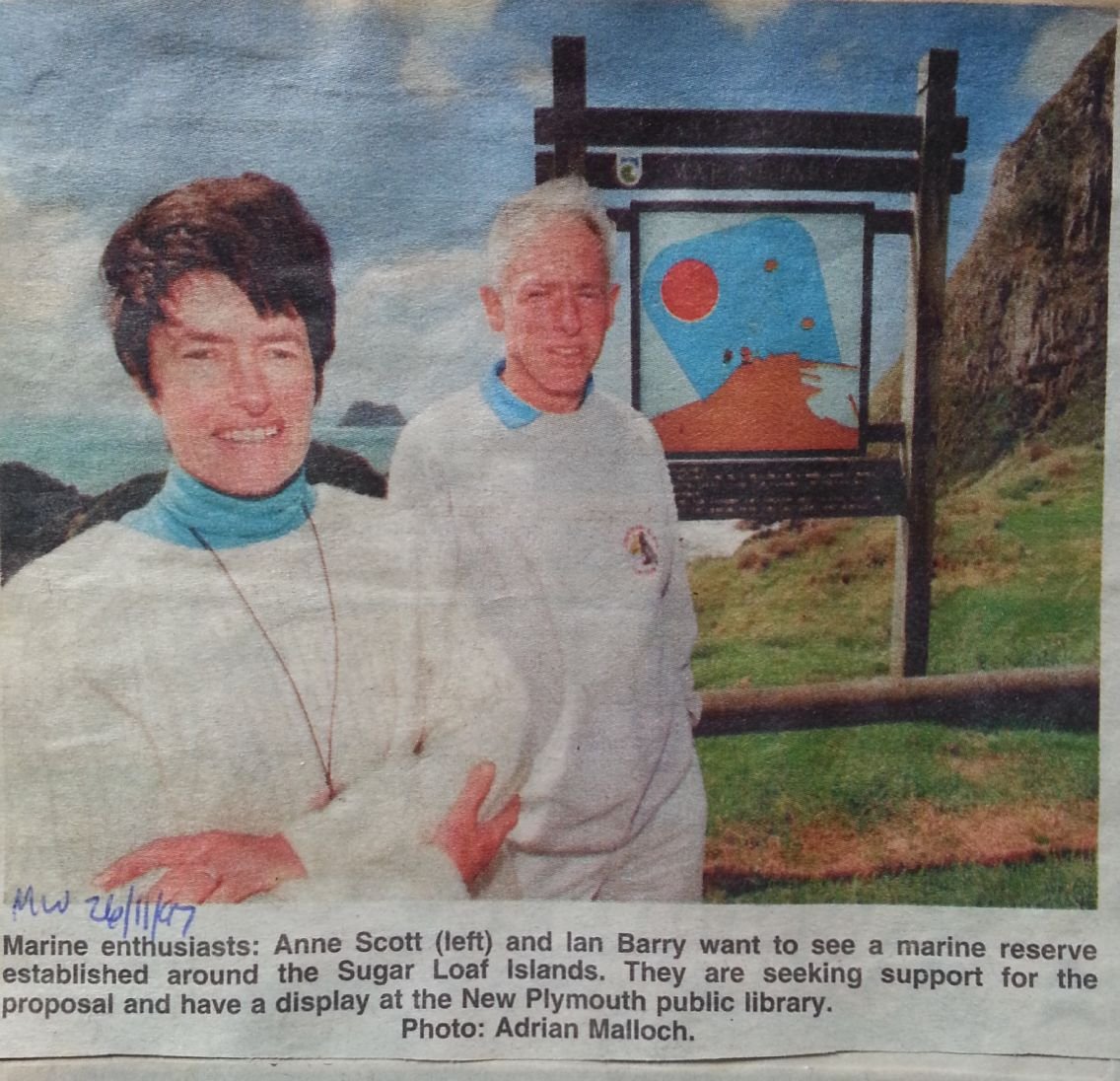
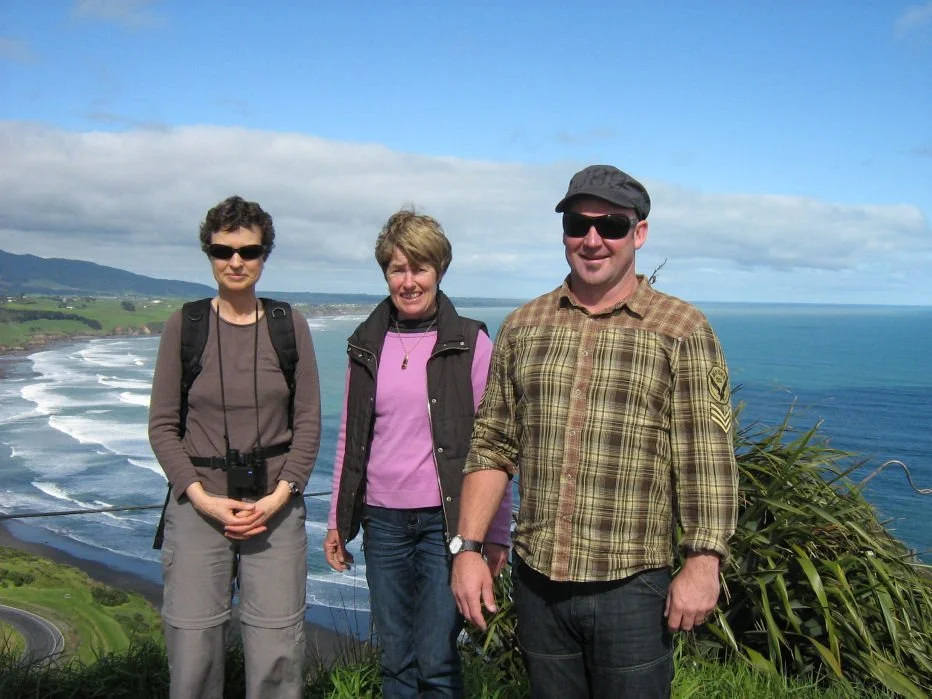
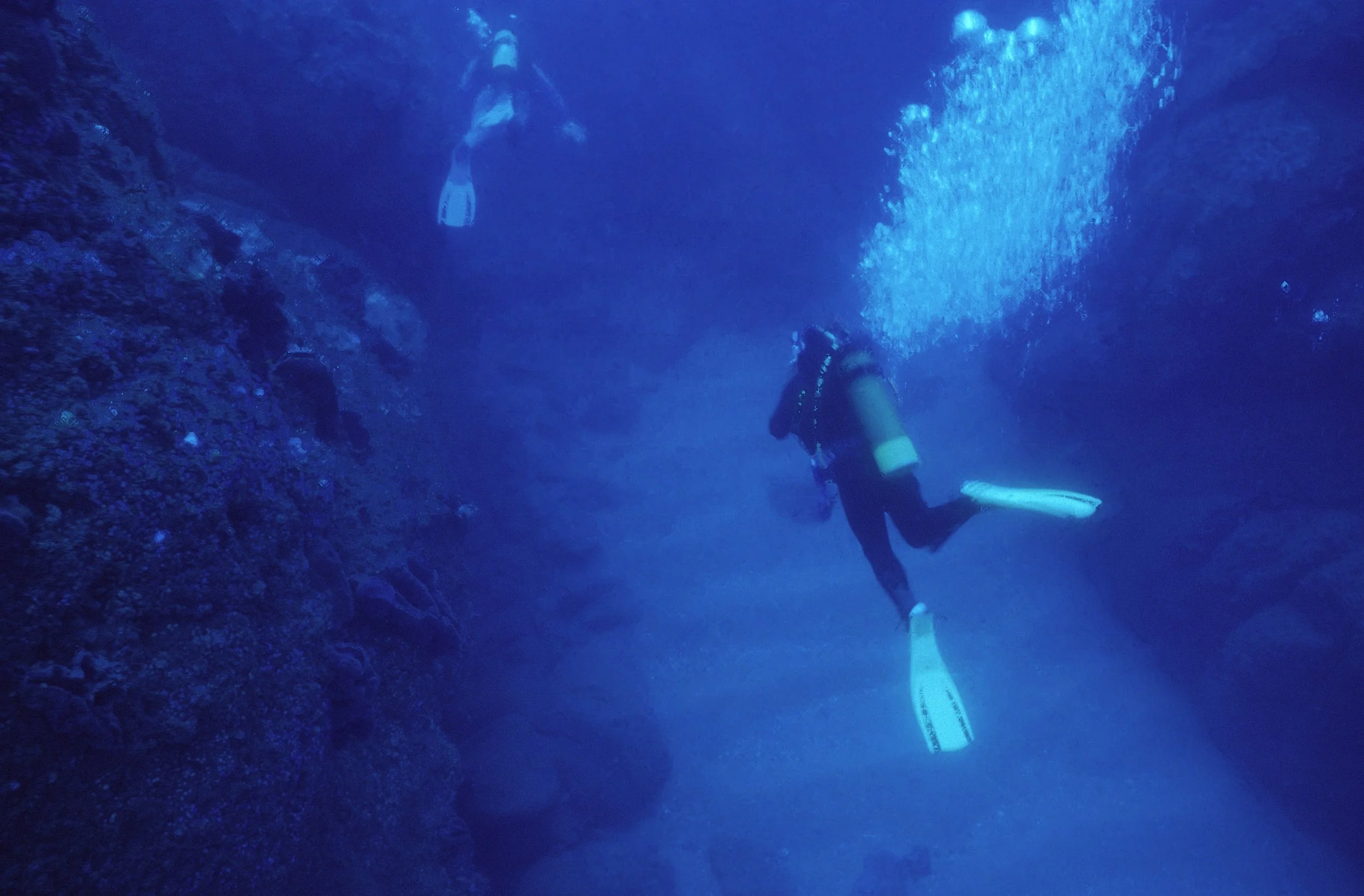
Images below from left, Barbara Hammonds, Anne Scott and Peter Crabb with Tapuae Marine Reserve behind, map of proposed marine reserve, divers at Hapuka Rock.
From Advocacy to Education: The Evolution of the Society
While marine reserve advocacy remained central, the Society’s work evolved significantly in the 2000s with the growth of Experiencing Marine Reserves (EMR).
Originally developed in Whangārei in 2001, EMR arrived in New Plymouth around 2010, led by teacher Pat Swanson following a teacher fellowship. The programme introduced thousands of students to marine environments through a carefully staged approach — from school pools, to Ngā Motu Beach, and ultimately to the Leigh Marine Reserve.
Early EMR trips were run on determination and goodwill:
Donated and patched-up snorkelling gear
Borrowed vehicles crammed with equipment
Minimal costs to families
Volunteers ensuring safety and supervision
Over time, EMR became increasingly professional, eventually leading to the Society’s first employee, Elvisa van der Leden (née Robb), who expanded the programme and developed initiatives like Finding Little Blue (a Curious Minds Project) which started in 2014.
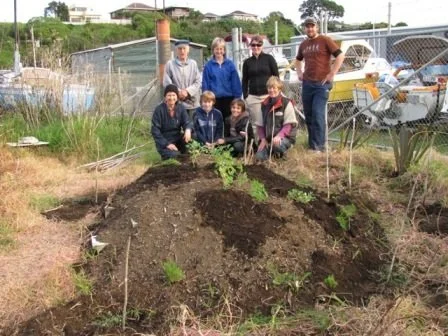
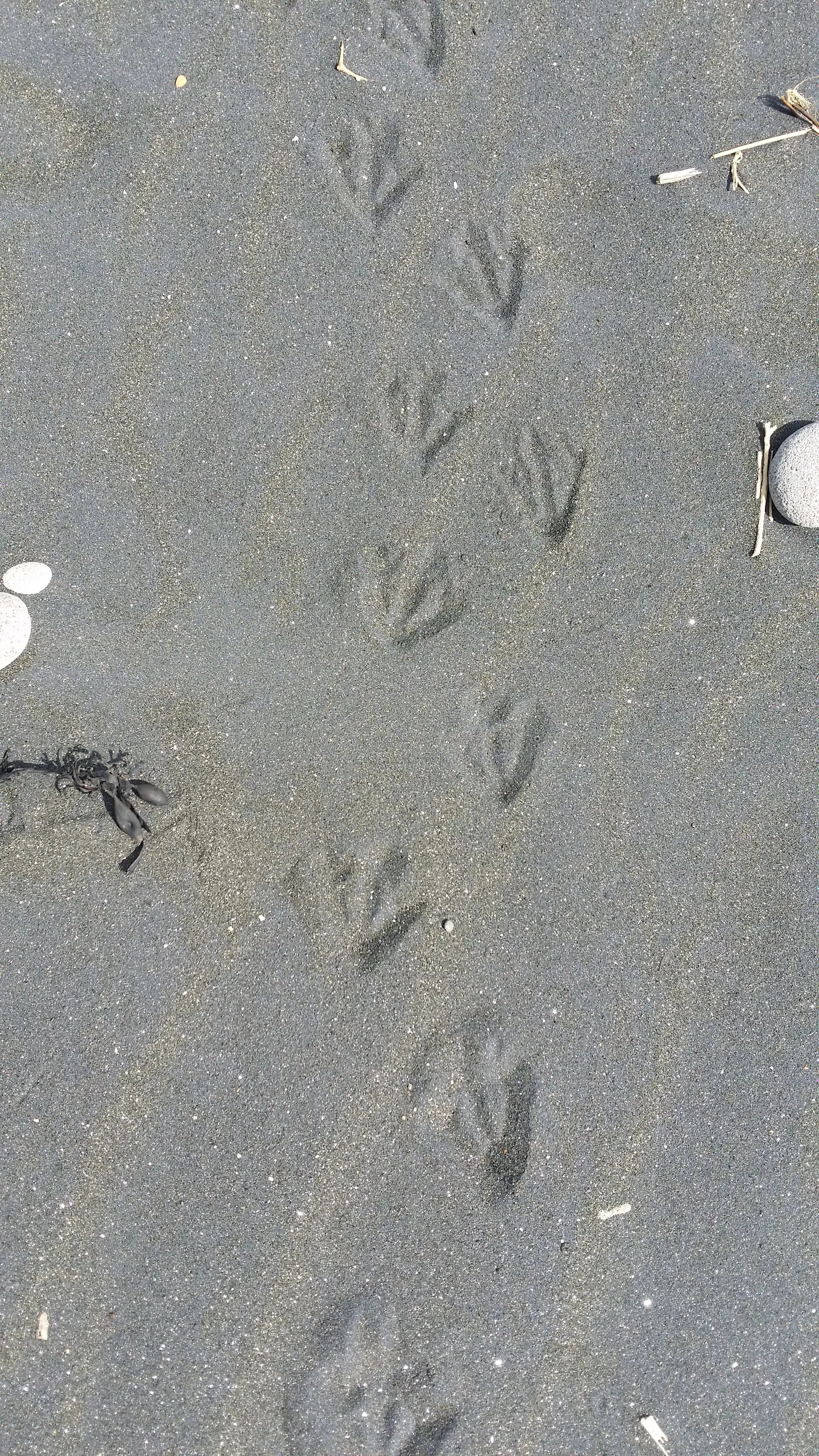
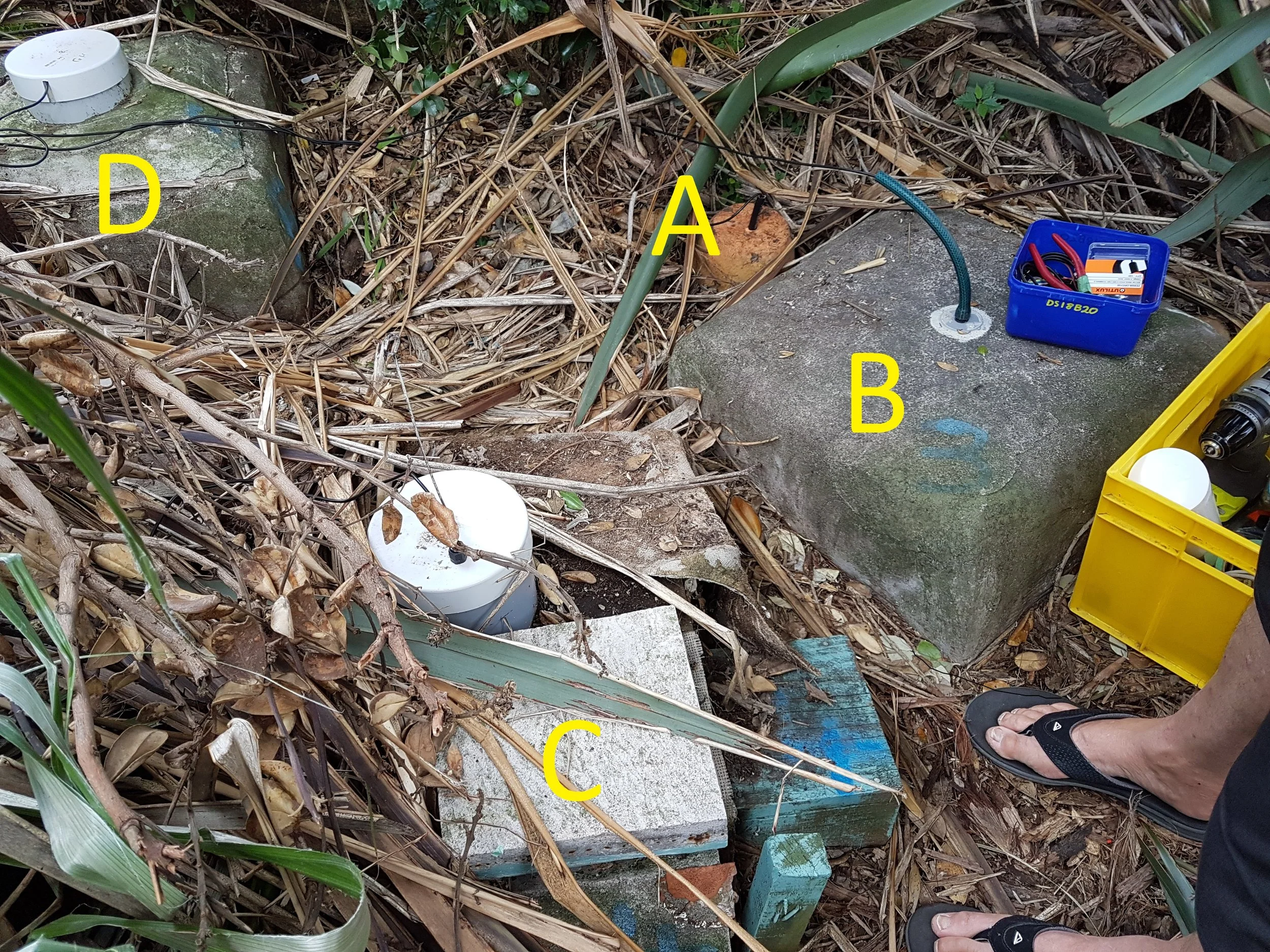
Images below from left, 2011 Original Penguin Burrows, Kororā footprints, Penguin boxes A, B and C.
The Society Today in 2026
Today, the Nga Motu Marine Reserve Society is recognised as a leader in marine education and community engagement in Taranaki.
Its work now includes:
EMR programmes with schools and whānau
Community snorkel days
Kororā (little blue penguin) monitoring and advocacy, begun in 2014
Nesting box installation and data collection
Partnerships with iwi, DOC, councils, port authorities, and local organisations
Fundraising and public events
The focus has shifted from advocacy alone to embedding understanding and care for the marine environment in the next generation.
As one founding member reflected, one of the most significant changes has been seeing recreational fishers come to support marine protection. This because they’ve seen that healthier ecosystems lead to better outcomes for everyone.
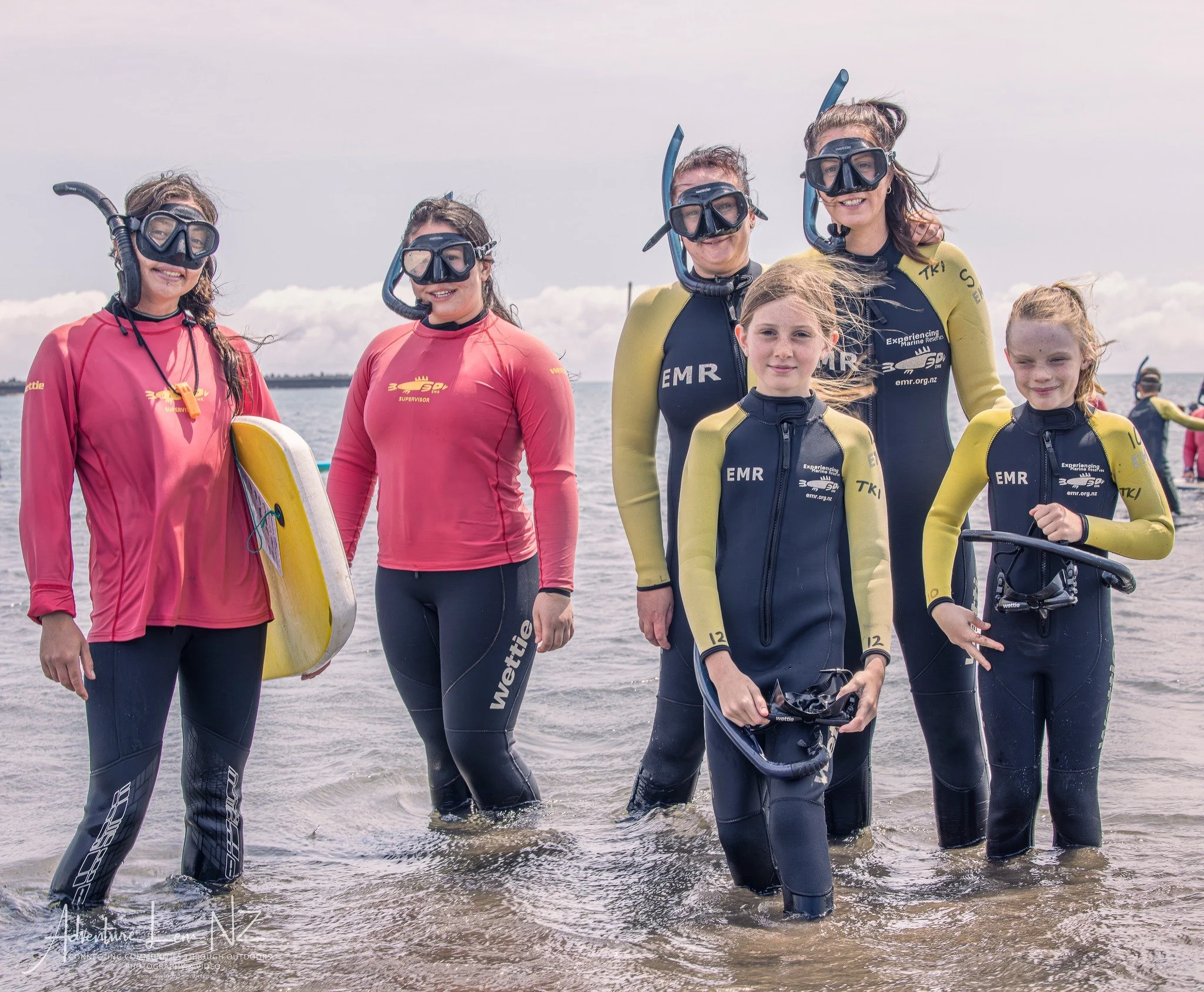
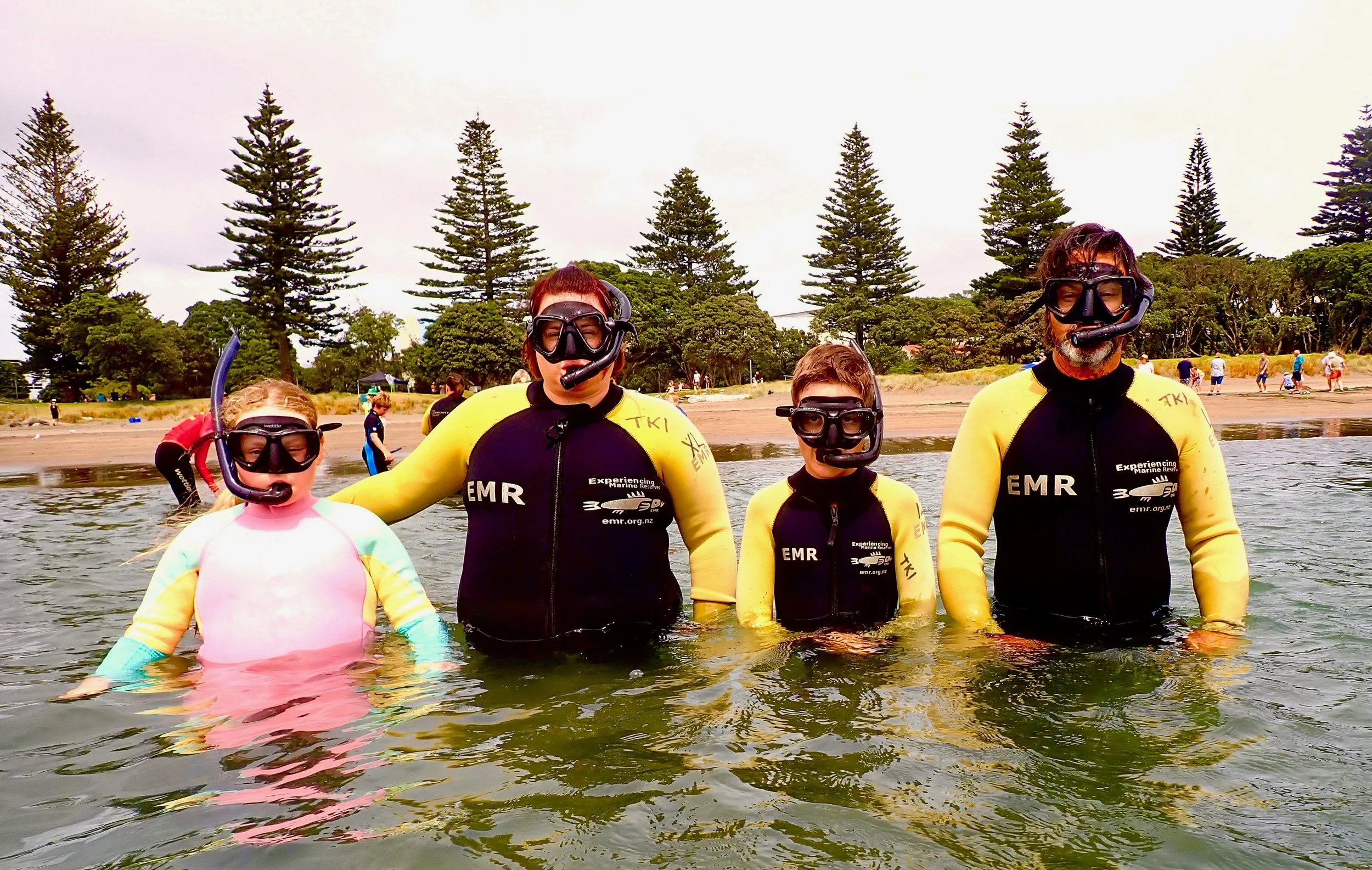
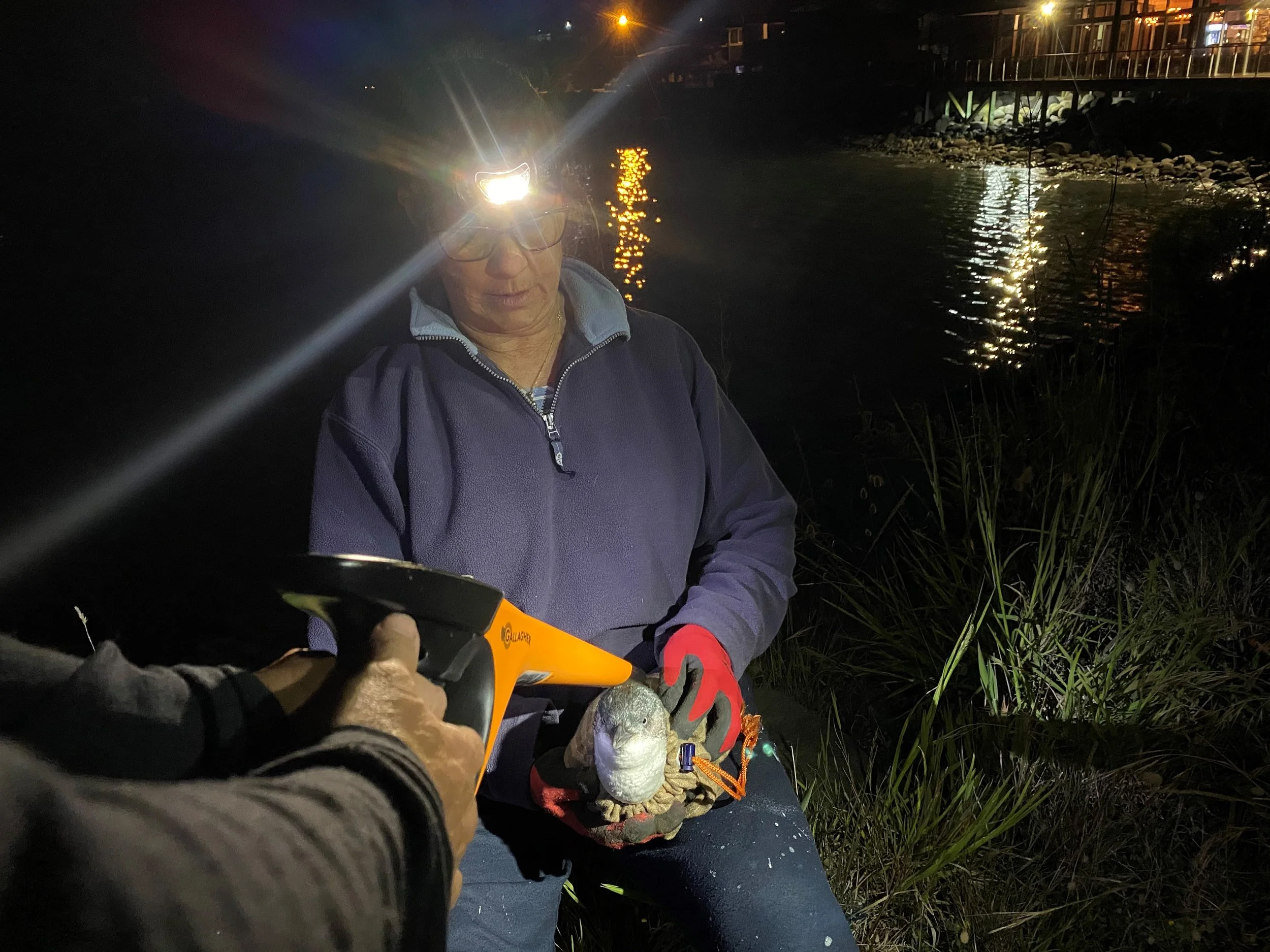
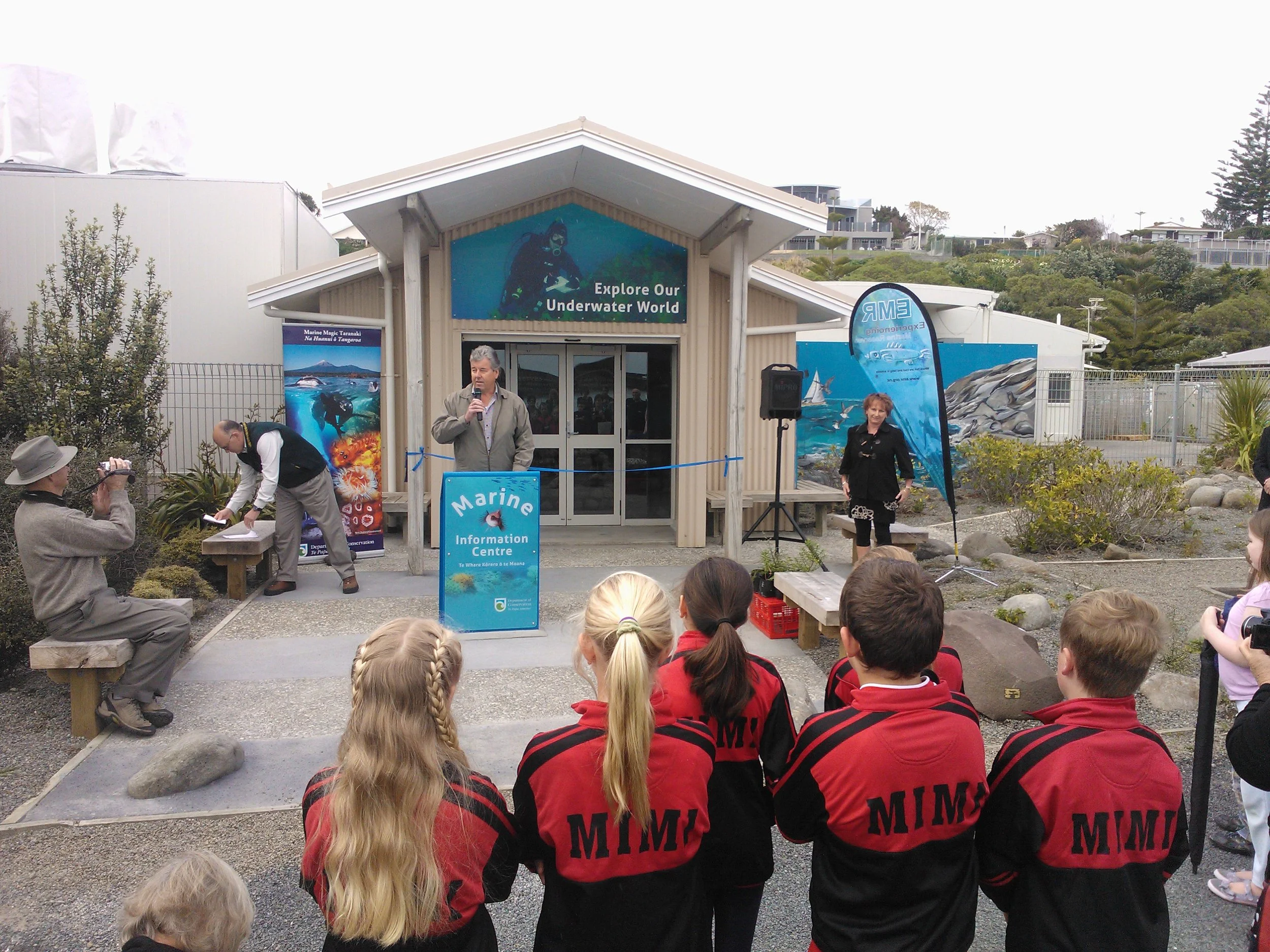
Images below from left, Experiencing Marine Reserves (EMR) participants at a community snorkel day, montoring Kororā/Little Blue Penguins, opening of the Marine Information Centre.
Looking Ahead: Hopes for the Future
Founding members share a common hope for the next 25 years:
that care for the marine environment becomes second nature, not exceptional.
Future priorities include:
Expanding marine education and EMR’s reach
Stronger protections for Kororā and other seabirds
Using technology such as nest monitoring, tracking and iNaturalist
Supporting young people to take practical, achievable action
The message to the next generation of ocean guardians is simple and consistent:
You can make a difference, and it doesn’t have to be hard.
Whether it’s volunteering at snorkel days, keeping dogs on leads near the foreshore, managing pets responsibly, or simply spending time in the marine environment and paying attention — small actions matter.
Personal Reflections
For those involved since the beginning, the coast is deeply personal.
For Anne, it’s a place of family, wellbeing, and hope for her grandchildren.
For others, it represents wildness, space, and renewal.
For educators and volunteers, it’s proof that learning leads to change.
One story captures the essence of the Society’s impact: a group of EMR students once planted a degraded stream in Waitara as their action project. Years later, native fish had returned, the stream was shaded by trees, and the children who made it happen had long since left school, leaving behind a living legacy.
A Legacy Built on Teamwork
When asked what they’re most proud of, founding members return again and again to the same theme: TEAMWORK.
A “random group of individuals,” united by care for the ocean, built something enduring, not through power or money, but through persistence, creativity, and belief.
And as the Nga Motu Marine Reserve Society looks ahead, that founding spirit remains its greatest strength.
**This article was published by Sophie Walker and Elise Smith on 30 July 2026 from interviews and consultation with current committee members from December 2025 to February 2026 and is a work in progress.